 Home link
“Play. Cooperate. Decide”. Board Game week as a part of Erasmus Days
Bohaterów Monte Cassino 46, 41-219 Sosnowiec, Poland
Szkoła Podstawowa nr 38 im. Tadeusza Kościuszki w Zespole Szkół Ogólnokształcących nr 5 z Oddziałami Integracyjnymi i Specjalnymi w Sosnowcu
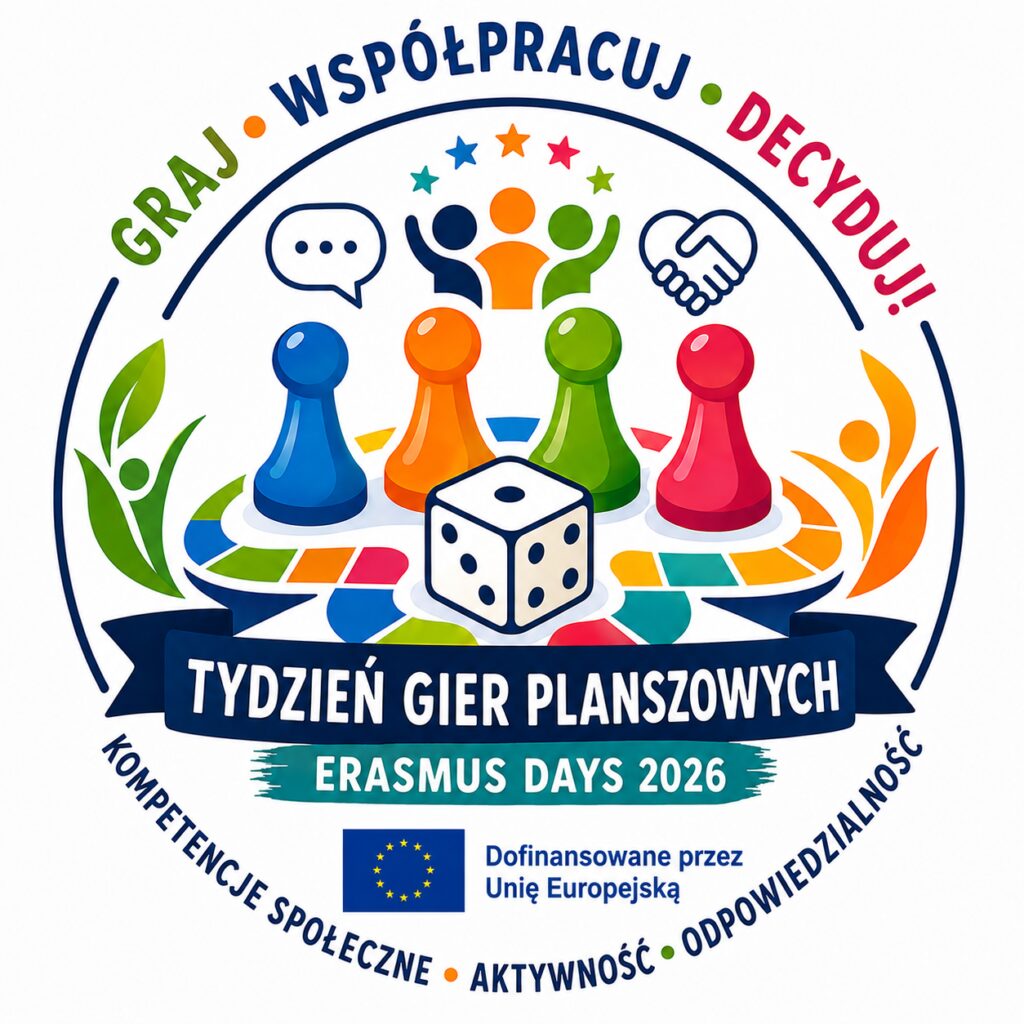
The Board Games Week “Play. Collaborate. Decide!” is an educational initiative implemented as part of Erasmus Days 2026 and is an activity to disseminate and continue the results of the Erasmus+ project “School Ready for the Future”.
One of the main objectives of the project is to develop students’ civic competences and prepare them for active, responsible and conscious participation in social life. The mobility and educational activities carried out as part of the project created an opportunity for students and teachers to learn about other cultures, international cooperation, exchange experiences, develop communication skills and shape attitudes of openness and respect towards others.
The next stage is the transfer of the experience gained during the implementation of the project to the everyday life of the school. The Board Games Week is an example of such a transfer – it uses active and engaging working methods to develop students’ social
and civic competences.
Board games create educational situations in which students must cooperate, communicate, follow commonly adopted rules, make decisions, anticipate their consequences, negotiate, resolve conflicts, and deal with success and failure.
The use of games understood in this way corresponds to the European approach to the development of key competences. These competences include the knowledge, skills and attitudes necessary for social inclusion and active citizenship, m.in.
The programme is a follow-up to the Erasmus+ project no. 2025-1-PL01-KA121-SCH-000331026
Main objective of the program:
Developing students’ social and civic competences through the use of board games as an active, engaging and integrating educational method and disseminating the results of the Erasmus+ project.
Specific objectives of the programme:
1. developing the ability to cooperate in a group;
2. improving interpersonal communication;
3. developing the ability to listen and express one’s own opinion;
4. shaping an attitude of respect for other people and their opinions;
5. developing the ability to negotiate and reach a compromise;
6. shaping responsibility for the decisions made;
7. developing critical and logical thinking;
8. improving problem-solving skills;
9. shaping the ability to comply with social rules and norms;
10. developing a sense of agency;
11. shaping the ability to cope with success and failure;
12. strengthening the integration of students;
13. developing attitudes of openness, tolerance and respect for diversity;
14. creating opportunities for active participation in the life of the school community;
15. dissemination of the results of the Erasmus+ project.
Developed competencies
During the implementation of the program, students will develop:
1. social competences, i.e. cooperation, communication, active listening, empathy, conflict resolution, negotiation, dealing with emotions, responsibility, self-regulation, respecting the needs and boundaries of others.
2. civic competences, i.e. adherence to commonly agreed rules, responsible decision-making, noticing the consequences of one’s own actions, respect for the rights and opinions of others, dialogue and culture of discussion, readiness to cooperate for a common goal, resolving disputes through conversation and negotiation, a sense of belonging to a community, active participation in school life.
3. Cognitive competences, i.e. critical thinking, information analysis, planning, anticipating consequences, making decisions, solving problems. Strategic thinking.
Methods and forms of work
The program will use strategic, cooperative, educational board games, requiring negotiations and decision-making, related to social, civic and European issues. The games used were purchased from the project fund, i.e. from the European Union.
Organization of the Week
Day 1 “Let’s get to know each other and work together” – Inauguration of the Board Games Week.
Students participate in integration and cooperative games, the aim of which is to achieve a result together.
Competencies: cooperation, communication, integration, trust, responsibility for the group.
Day 2 “Think, Plan, Decide”
Strategy and logic games.
Students analyze the available options, anticipate the consequences of their actions
and make decisions.
Competencies: critical thinking, planning, problem solving, responsibility for decisions.
Day 3 “Let’s talk and negotiate”
A game that requires communication, negotiation, exchanging arguments and reaching compromises.
Competences: communication, negotiation, culture of dialogue, respect for other opinions.
Day 4 “Together for a common goal”
Co-op games and team tasks.
Particular emphasis will be placed on situations where success depends on the cooperation of all participants.
Competences: cooperation, responsibility, empathy, sense of community.
Day 5 “Erasmus Game Day”
The final competition and the summary of the week.
Awarding of prizes and diplomas. Summary of students’ experiences and discussion about competences developed throughout the week.
Competences: social activity, agency, cooperation, responsibility, reflection on one’s own development.
COMPETITION ELEMENT
As part of the event, a board game competition/tournament will be held. Not only the results of the games can be evaluated, but also the attitudes of the participants. Proposed categories:
• Master of Strategy – for the ability to plan and make decisions;
• Master of Cooperation – for the best cooperation in the group;
• Master of Dialogue – for communication and culture of discussion;
• Fair Play – for following the rules and respecting opponents;
• Super Team – for the best teamwork.
Such a solution allows us to move away from the message that the most important thing is only to “win the game”. However, it emphasizes that the value is the way students cooperate and communicate with others.
ADAPTING BOARD GAMES TO THE INDIVIDUAL ABILITIES OF STUDENTS
The program will be implemented taking into account the diverse needs and capabilities of students.
The selection of games will take into account different levels of difficulty, pace of work, communication opportunities and the needs of students who require additional support.
Co-op games will be particularly used to build a sense of belonging and enable all students to actively participate in activities.
Therefore, the program will support not only the development of social competences, but also the integration and inclusion of all students in the life of the school community.
If it is necessary some programme modifications can be implemented.
PROGRAM RESULTS
Direct results: participation of pupils in competitions and activities, organisation of a week of educational activities, increase in the number of pupils involved in Erasmus+ activities, preparation of materials to promote the project, organisation of the competition and award ceremony.